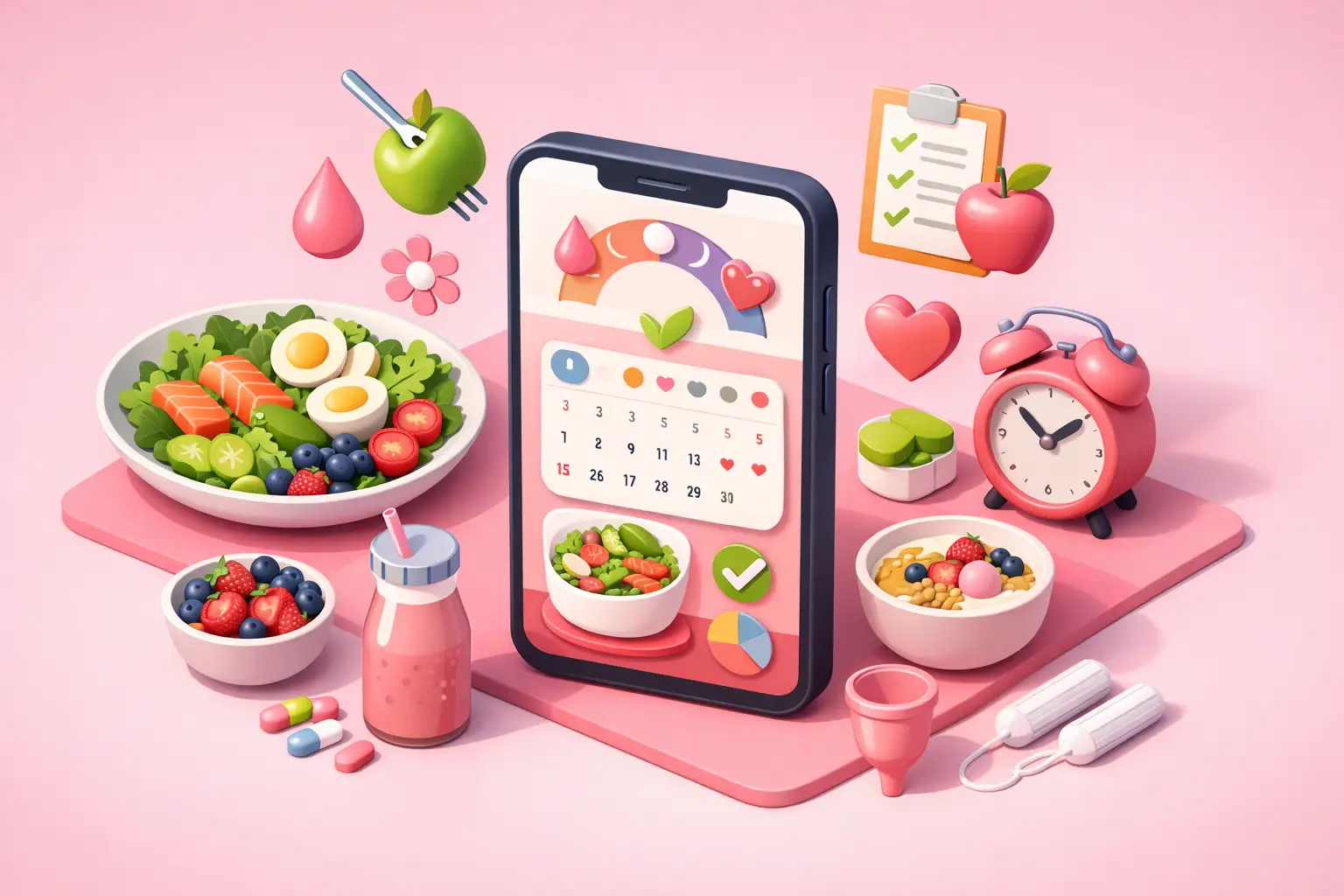
Some weeks, meal planning feels easy. Other weeks, your usual breakfast sounds awful, you want crisps at 4pm, your energy drops through the floor, and your stomach suddenly has opinions. That is exactly where a menstrual cycle meal planning app can help - not by telling you to eat perfectly, but by making food decisions feel less hard.
The best apps do not treat your cycle like a cute extra feature. They use it properly. That means recognising that appetite, energy, cravings, digestion, motivation and training capacity can shift across the month. If you are also using GLP-1 medication, those shifts can feel even more obvious. One day you are managing low appetite. The next, you are trying to eat enough protein while dealing with nausea and period fatigue at the same time.
What a menstrual cycle meal planning app should actually do
A good app should do more than tell you which phase you are in. That part is easy. The useful bit is what happens next.
If your cycle data says you are heading into your luteal phase, the app should adjust meal suggestions in a way that makes sense. Maybe that means more filling meals, more structured snacks, or recipes that support energy and satiety without turning into a food rules lecture. If your period has started and you feel wiped out, the app should not act like you are in the mood for complicated prep and a 17-ingredient lunch.
This is where a lot of wellness tools miss the mark. They track, but they do not help. Or they give generic advice that sounds nice but falls apart the minute real life shows up. A proper menstrual cycle meal planning app should connect symptoms to practical food choices. It should help you answer the question most people actually have: what can I eat today that feels manageable and supports how I feel right now?
Why cycle-based nutrition feels different from standard meal planning
Normal meal planners tend to assume your body behaves the same way every day. It does not. Your hunger can change. Your tolerance for certain foods can change. Even your willingness to cook can vanish for a few days.
Cycle-based planning works better because it accepts that fluctuation. It does not expect the same meals, portions or routines to suit every week. That can be a relief if you are tired of blaming yourself for not sticking to a rigid plan.
It also creates a more realistic version of consistency. Consistency is not eating the exact same breakfast 30 days in a row. Sometimes it is knowing that, when your energy is low, you need quicker meals. Sometimes it is having higher-protein options ready before cravings hit. Sometimes it is choosing softer, simpler foods because your stomach is all over the place.
That kind of flexibility is not a cop-out. It is smart planning.
The features that matter most
The best menstrual cycle meal planning app is not the one with the prettiest charts. It is the one that saves you decision fatigue.
Cycle tracking is the obvious starting point, but symptom tracking matters just as much. Two people can be in the same phase and feel completely different. One might want bigger meals and chocolate. Another might be bloated, headachy and barely interested in food. An app should let you log what is actually happening, then respond with meal ideas that reflect that.
Recipe personalisation is another big one. There is no point suggesting meals that ignore your preferences, cooking ability, budget or available ingredients. If an app can adapt meals based on what you already have, that is genuinely useful. If it can also take account of higher protein needs, low appetite days, or digestive discomfort, even better.
A built-in grocery plan helps too, especially when your brain feels foggy. When energy is low, the mental effort of deciding what to buy can be worse than the cooking itself. The right app reduces that load.
Barcode scanning, food logging and simple macro tracking can be helpful if they are done lightly. The key word is lightly. Most people do not need another tool making them obsess over every bite. But a gentle way to notice patterns - like whether you eat less protein during certain phases or skip meals when symptoms spike - can be genuinely useful.
If you use GLP-1 medication, the right app matters even more
This is where things get more nuanced. If you are on Ozempic, Wegovy, Mounjaro or similar medication, your appetite and digestion may already feel unpredictable. Add cycle changes on top, and standard nutrition advice can become pretty useless.
A menstrual cycle meal planning app for GLP-1 users needs to understand both sides. It should recognise the medication rhythm as well as the hormonal one. That means helping you navigate low appetite, nausea, fullness, constipation or food aversions while still supporting your nutrition across the month.
For example, the meals that work well a day after your injection may not be the same meals that feel doable just before your period. Your app should be smart enough to adjust. That might mean smaller protein-forward meals, gentler breakfast options, simpler snacks, or recipes matched to symptoms rather than a rigid plan.
This is one of the reasons dual-purpose tools can work so well. If one app can support medication-aware eating and cycle-aware eating together, you do not have to piece things together across three different platforms and your Notes app. That saves time, but more importantly, it lowers stress.
What to avoid in a menstrual cycle meal planning app
If an app makes big promises about fixing your hormones with a perfect meal plan, be sceptical. Bodies are not that tidy. Food can support how you feel, but no app should pretend it can control every symptom or create a flawless month.
It is also worth avoiding tools that lean too hard into restriction. If the advice gets overly rigid, guilt-driven or obsessed with cutting foods out, that is usually a sign the app is not built for real people. Most of us need support we can actually use on a Wednesday when the shops are shut, the fridge is random, and we cannot be bothered.
Another red flag is generic phase advice with no personalisation. Saying eat this in the follicular phase and that in the luteal phase is not enough. Helpful support needs context. Your symptoms, schedule, appetite, budget and food preferences all matter.
What good support looks like in real life
Good support feels practical. It helps on the days when your usual meals sound grim. It gives you easy options when your concentration is shot. It notices patterns without making you feel watched.
Maybe that means batch-cooking a couple of meals before your hardest week. Maybe it means having three low-effort breakfasts you know you can manage. Maybe it means an app suggesting a higher-protein snack because your hunger tends to climb in the late luteal phase. None of that is dramatic. That is why it works.
The best tools also leave room for your life. Your cycle may not be regular. Your symptoms may change. You may have months where the data feels useful and months where you mostly want something simple for dinner. A good app supports all of that.
Sillynutrition takes this more practical approach. Rather than throwing generic cycle tips at you, it is built to adapt meal suggestions around symptoms, preferences and real-world appetite changes, including for people also managing GLP-1 medication.
So, is a menstrual cycle meal planning app worth it?
If meal planning already feels easy and your body feels predictable, maybe not. But for a lot of people, food choices get harder at different points in the month, and that can create a frustrating cycle of under-eating, overthinking, convenience grabbing, then feeling annoyed with yourself.
The right app will not make you love every phase of your cycle. It will not remove cravings, bloating or fatigue. What it can do is make those weeks less chaotic. It can give you options that fit how you actually feel, help you eat more consistently, and cut the mental load that comes with trying to figure it all out from scratch.
And honestly, that is often the win people are looking for. Not perfection. Just fewer moments standing in the kitchen wondering what on earth to eat when your body has changed the rules again.
If an app can meet you there, without judgement and without making food more complicated than it needs to be, that is probably the one worth keeping.