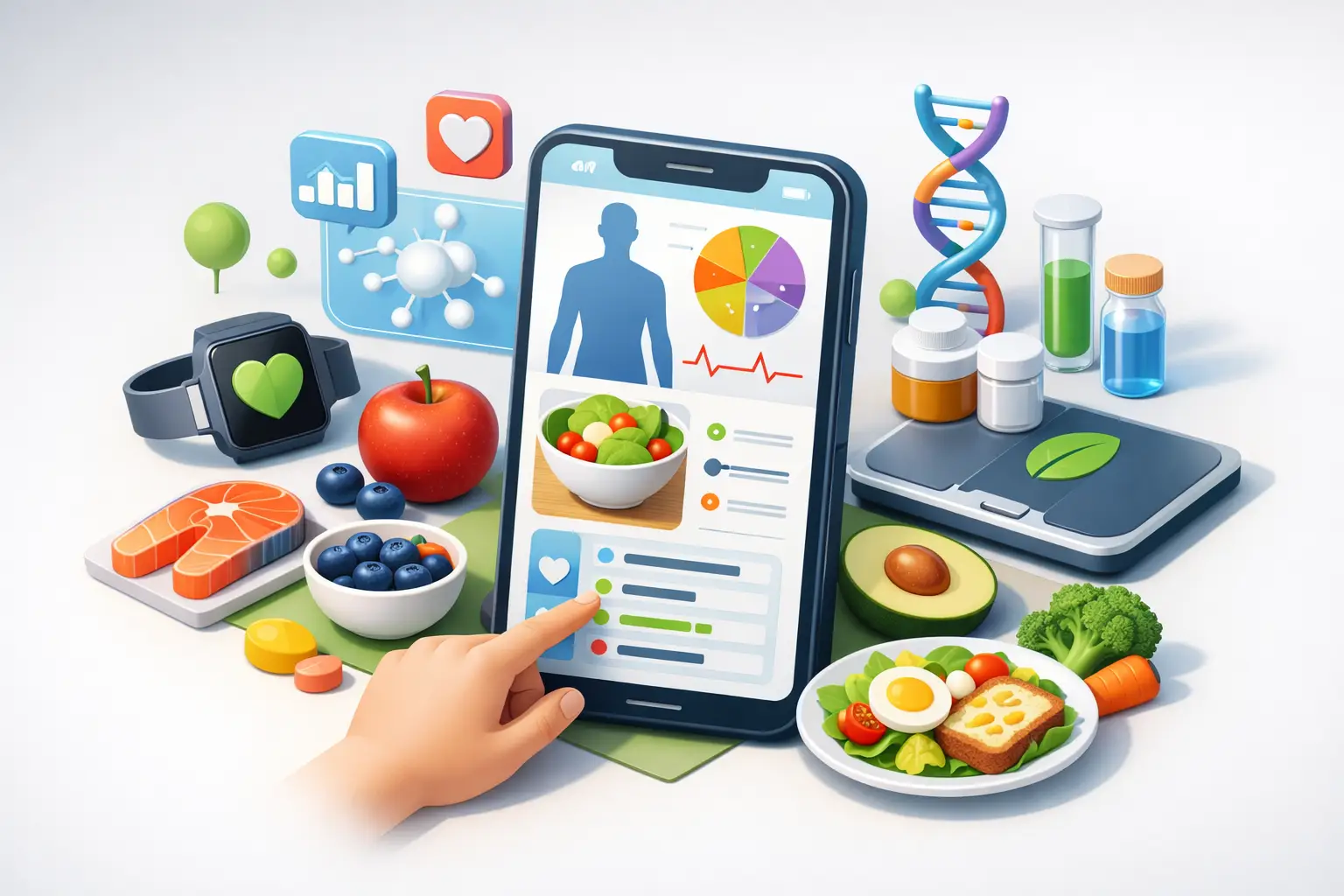
Most people do not need more nutrition advice. They need help deciding what to eat when real life gets messy. That is usually where how personalised nutrition apps work becomes interesting. The best ones do not just hand you a generic meal plan and hope for the best. They take your goals, habits, symptoms, preferences and day-to-day patterns, then turn that into suggestions you can actually use.
If you have ever opened a food app and felt judged, confused or bored within five minutes, you are not alone. Plenty of apps still treat everyone like they have the same appetite, schedule and energy. They do not. Someone dealing with GLP-1 nausea needs very different support from someone trying to eat more protein around gym sessions. A useful app should know the difference.
How personalised nutrition apps work in real life
At the simplest level, a personalised nutrition app collects information about you, then uses that information to shape what it shows you. That sounds obvious, but the quality of the experience depends on what data it asks for, how often it updates, and whether it responds to real-life changes.
Most apps begin with a set-up flow. You might enter your age, height, activity level, dietary preferences, allergies, goals and food dislikes. Some will ask about broader aims like improving energy, supporting weight management, building muscle or eating more consistently. Others go further and include medication use, digestive symptoms, menstrual cycle patterns or how often you cook at home.
That first layer builds your baseline. It gives the app a starting point, not a final answer. Good personalisation does not stop after day one. It keeps learning from what you log, skip, repeat and struggle with.
The data behind the personalisation
Most nutrition apps personalise recommendations using a mix of declared data and behavioural data. Declared data is what you tell the app directly. Behavioural data is what your actions reveal over time.
If you say you love high-protein breakfasts but keep skipping breakfast because you feel queasy in the morning, a smart app should adjust. It might stop pushing big meals at 8 am and suggest smaller, easier options instead. That is where personalisation becomes genuinely helpful rather than just decorative.
Some apps also pull in data from wearables or health platforms. That can include step count, sleep, heart rate or workout activity. On paper, that sounds great. In practice, it depends on what the app does with the data. Extra information only matters if it leads to better choices, such as nudging you towards easier meals after a poor night of sleep or helping you spread protein intake across the day.
For GLP-1 users, the most useful data often has less to do with fitness and more to do with symptoms. Nausea, reduced appetite, bloating, constipation and injection timing can all affect what feels manageable. An app that tracks those patterns can suggest food that suits the day you are actually having, not the perfect day imagined by a standard meal planner.
Why algorithms matter, but context matters more
When people hear AI in nutrition, they often imagine something highly technical working behind the scenes. That is partly true. These apps use rules, models and recommendation systems to match meals, recipes and targets to your profile. But the real value is not the technology itself. It is whether the app applies context well.
For example, if you are trying to increase protein, the app might suggest meals with more yoghurt, eggs, chicken or lentils. Straightforward enough. But if you are on a GLP-1 medication and struggling to finish full meals, the better suggestion may be a lighter, symptom-friendly option that still gives you decent protein without making you feel worse.
That is an important difference. Personalisation is not just giving you more options. It is narrowing the options to the ones that make sense for your body, your appetite and your routine.
What the best apps actually personalise
Not every app personalises the same things. Some focus mostly on calories and macros. Others build around recipes, meal timing or grocery planning. The strongest ones usually personalise across several layers at once.
They might adjust portion sizes based on appetite, swap ingredients around allergies or preferences, recommend recipes based on what you already have in the fridge, and change meal suggestions based on symptoms or time of day. Some can even respond to your menstrual cycle or medication schedule. That matters because nutrition is rarely static. What works on Monday may feel impossible on Thursday.
This is especially true for people using GLP-1 medication. Appetite can shift fast. One day you are fine with a normal lunch. The next day, a few bites feels like plenty. A rigid plan will fall apart quickly. A responsive app can offer alternatives without turning every meal into a maths problem.
Food logging is only one part of it
A lot of people assume these apps work by making you log everything you eat forever. Some do rely heavily on manual tracking, and for certain users that can be useful. It helps spot patterns, build awareness and check whether you are getting enough protein, fibre or fluids.
But constant logging is not always realistic. It can also feel draining if the app turns food into admin. Better apps reduce that friction. They use barcode scanning, saved meals, photo logging or quick-add tools so you spend less time typing and more time making decisions.
The bigger point is this. Logging should serve you. You should not feel like you are working for the app. If tracking makes you more stressed, the personalisation has failed.
Personalisation is only as good as the recommendations
This is where many apps fall short. They collect loads of information, then give bland or unrealistic advice. Telling someone to eat a balanced lunch is not personalisation. Suggesting a soft, higher-protein lunch that is easier to tolerate the day after an injection is.
Useful recommendations are specific. They fit your schedule, budget, cooking confidence and energy. They account for the fact that some days you want a recipe, some days you want something from the supermarket, and some days you just need a small meal that stays down.
That is why recipe libraries, barcode scanners, AI meal builders and symptom-aware suggestions can work well together. Instead of forcing one ideal way of eating, they help you find the next doable option.
The trade-offs to know before you rely on one
Personalised nutrition apps can be brilliant, but they are not magic. They work best when the information going in is reasonably accurate and when the app is built around real behaviour rather than wishful thinking.
There are trade-offs. If an app asks too few questions, the advice may feel generic. If it asks too many, people stop using it. If it leans too hard on strict targets, it can feel punishing. If it is too loose, it may not help you change anything.
There is also the issue of nuance. An app can suggest patterns and options, but it cannot fully replace medical advice, especially if you have a health condition, significant side effects or complicated dietary needs. For GLP-1 users, that distinction matters. An app can support daily aftercare and help you eat more comfortably, but it should not pretend to be your prescriber.
Privacy matters too. These apps handle personal health and food data, so trust is a big part of the product. If an app is vague about what it tracks or why, people notice.
What this looks like when it is done well
When a personalised nutrition app is working properly, it should feel less like being monitored and more like being supported. You open it and the suggestions make sense. The meals feel doable. The prompts arrive at the right time. The app notices patterns you might miss, like afternoon energy dips, recurring symptom flare-ups or the fact that you eat better when breakfast is simple.
For someone on GLP-1 medication, that might mean meal ideas that change across the injection cycle, gentle reminders about hydration, and symptom tracking that helps connect the dots. For someone using nutrition mode on its own, it might mean fast meal planning, better protein balance and fewer last-minute takeaway decisions. Different goal, same principle - the app should adapt to you, not force you into someone else's system.
That is also why dual-mode platforms are becoming more relevant. People do not fit neatly into one box forever. Your needs can change. You might want medication-aware support now and simpler meal planning later. A flexible app can grow with you.
Sillynutrition is built around that idea. Not more pressure. Not more noise. Just smarter support that meets you where you are.
How to tell if an app will actually help you
Look past the flashy AI claims and ask a simpler question. Does this app understand the problem I am trying to solve? If your issue is appetite confusion, side effects, food boredom or decision fatigue, the app should address that directly.
It should also make everyday choices easier. Can it help you plan meals quickly? Adjust when your appetite changes? Suggest food you might genuinely eat? Support small wins instead of chasing perfection? Those details matter more than big promises.
The best personalised nutrition apps do not try to turn you into a different person. They help you work with your real body, your real routine and your real capacity that day. And sometimes that win is not dramatic. Sometimes it is simply this: you found something to eat, it suited you, and you felt a bit more in control. That counts for a lot.