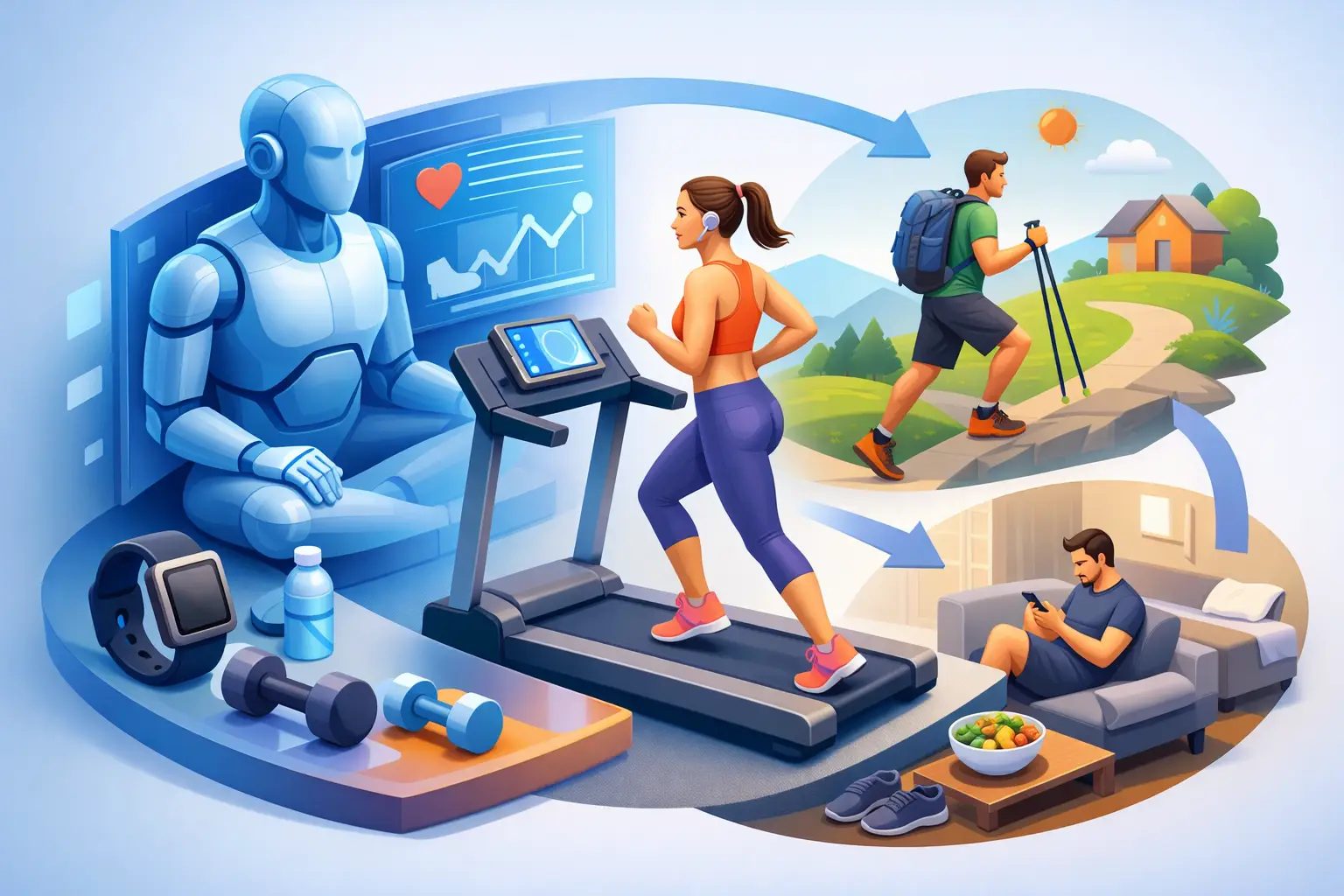
You do not need a fitness plan that assumes you sleep eight hours, love meal prep, and wake up bursting with energy every morning. You need one that still makes sense after a bad night, a stressful week, a skipped lunch, or a day when your appetite has vanished. That is exactly why people ask how AI fitness plans adapt - because a fixed plan looks good on paper, but real life rarely sticks to paper.
The short answer is simple. AI adapts by learning from your inputs, your patterns, and your responses over time. But the useful answer is more specific than that. A good AI fitness plan is not just swapping one workout for another. It is adjusting the right thing at the right time, without turning your routine into guesswork.
How AI fitness plans adapt from week to week
Traditional plans are usually built around averages. Average recovery. Average energy. Average schedule. That works for some people, for a while. Then life happens. Work runs late. Your steps drop. Your appetite changes. You feel sore for longer than expected. If you are using GLP-1 medication, your week can shift even more depending on side effects, meal tolerance, hydration, and where you are in your injection cycle.
AI works differently because it can respond to fresh information instead of treating your starting plan like a contract. If your recovery data suggests you are not bouncing back well, training volume may drop. If your consistency is strong and sessions are feeling easier, the plan may progress. If your schedule changes and you only have 20 minutes instead of 45, the system can reshuffle rather than write the whole week off.
That adaptability matters because progress is rarely about one heroic session. It is about stringing together enough good-enough days to keep moving.
What data helps AI make better fitness decisions
AI is only as helpful as the signals it gets. Some plans use wearable data like heart rate, sleep, and step count. Others rely more on check-ins such as energy, soreness, mood, appetite, and whether you actually completed the last session. The best systems usually blend both.
That balance matters. Wearables can tell you that your sleep was short. They cannot always tell you that you were up at 3am feeling queasy, or that the thought of a heavy leg session makes you want to crawl back into bed. On the other hand, self-reported check-ins can be inconsistent if the app asks too much, too often.
So the smartest AI does not chase every data point. It looks for patterns that are actually useful. If your training drops off every Thursday because work is chaos, that is helpful. If your appetite is lowest the day after medication and higher later in the week, that is helpful too. Once the system spots those trends, it can make adjustments that feel less like punishment and more like support.
The biggest ways AI fitness plans adapt
The first and most obvious shift is training load. That means how hard, how often, and how much you are doing. If the plan sees signs of fatigue, it may reduce intensity, shorten the session, or swap a demanding workout for lower-impact movement. If you are coping well, it may add progression gradually.
The second is exercise selection. This is where AI can be more practical than many generic plans. If you consistently skip exercises that need loads of kit, the app may start favouring options you can do at home or in a busy gym. If certain movements always aggravate your knees or lower back, they can be replaced rather than repeatedly forcing the issue.
The third is timing. Good plans adapt not just what you do, but when you do it. If your best energy tends to be late morning, the system may suggest harder sessions there and keep lighter work for low-energy windows. That sounds small, but for many people it is the difference between a plan that fits and one that gets ignored.
Nutrition can adapt too, and this is where fitness plans often fall down if they treat food and training as separate worlds. If your goal is strength, recovery, or better energy, your plan should respond to what you are actually able to eat. That is especially true for people dealing with reduced appetite, nausea, or food aversions. There is no point prescribing hard training on days when eating enough feels like work in itself.
How AI fitness plans adapt for GLP-1 users
This is where nuance matters. A lot of fitness content still assumes your hunger, energy, and recovery are steady. On GLP-1 medication, they often are not. One part of the week may feel manageable. Another may bring nausea, fullness after a few bites, or a weird disconnect from normal hunger cues.
A decent AI plan should respond to that reality without making you feel like you have failed. If symptoms are stronger, training may need to lean towards walking, mobility, or shorter resistance sessions. If food intake is low, recovery expectations may need to change. If hydration has been poor, a hard session might not be the smartest call, even if the calendar says it is leg day.
This does not mean progress stops every time symptoms flare. It means the plan stops pretending your body is a machine. For GLP-1 users, adaptation is not a luxury feature. It is often the thing that makes consistency possible.
That is also why nutrition-aware systems are more useful than fitness-only ones. If your app understands appetite changes, symptom patterns, and what meals feel manageable, it can support training in a more realistic way. Sillynutrition is built around that kind of practical personalisation, especially for users who need support that actually reflects medication life.
Where AI works well and where it does not
AI is brilliant at spotting trends humans miss. It can notice that you perform better after a rest day, that your consistency improves with shorter sessions, or that your energy dips at a predictable point each week. It is also good at removing decision fatigue. Instead of asking, what should I do today, you get a plan that has already adjusted for what is going on.
But there are limits.
AI does not automatically understand context unless you give it context. If you ticked "missed workout" because your child was ill, that is different from missing it because the plan was unrealistic. If your appetite is low because of medication side effects, that is different from simply not fancying breakfast. Without the right inputs, recommendations can become too generic.
There is also the risk of overreacting to short-term noise. One bad sleep score should not wreck your whole week. One strong session does not mean you are ready to ramp everything up. The best AI systems do not panic. They adapt with some restraint.
And then there is the human side. Some people want flexibility but still like structure. Others get frustrated if the plan changes too often. So the right level of adaptation depends on personality as well as physiology. The smartest plan is not always the one with the most features. It is the one you will actually keep using.
What to look for in an adaptive AI fitness plan
If you are choosing an app or platform, look beyond flashy promises. Ask whether the system adjusts based on recovery, time available, and real-world consistency, not just ideal targets. Check whether it can respond to low-energy days without writing you off. See if it connects training with nutrition, especially if appetite, digestion, or medication affect what you can manage.
It also helps if the plan explains its decisions in plain English. You should know why a hard session became a lighter one, or why your weekly target shifted. That transparency builds trust. It also stops the experience feeling random.
Most importantly, look for a system that respects your body rather than trying to out-stubborn it. A good plan pushes when pushing makes sense. It eases off when easing off will help you come back stronger. There is a difference between challenge and punishment.
The real benefit of adaptation
The best thing about adaptive planning is not that it feels high-tech. It is that it makes the plan kinder and more usable. It meets you where you are, then helps you move forward from there.
That matters whether you are building strength, trying to feel less wiped out, getting back into movement, or juggling fitness with GLP-1 side effects and a busy life. Some weeks you will want progression. Some weeks the win is simply staying consistent without feeling dreadful.
A plan that can tell the difference is worth far more than one that looks impressive but falls apart the moment life gets messy.
If your routine has ever felt too rigid, too punishing, or built for someone with a completely different body and schedule, this is the shift to look for. Not more pressure. Not more perfection. Just smarter support that adjusts when you need it to.