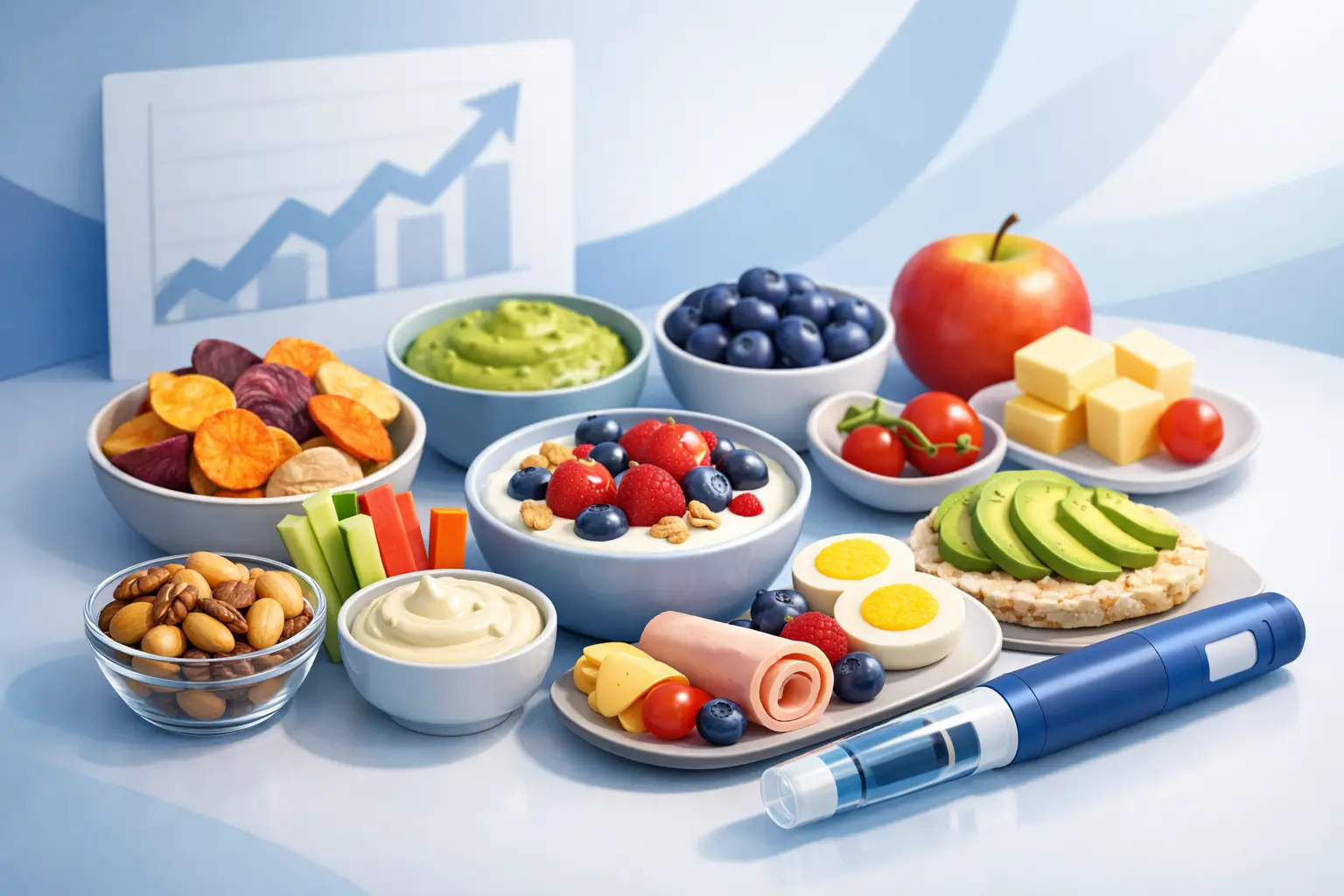
Some days on GLP-1 medication, a full meal feels fine. Other days, three bites in and your stomach says absolutely not. That is why finding the best snacks for GLP-1 users matters so much. The right snack can help you get some protein in, steady your energy, and avoid that awful swing between not hungry at all and suddenly feeling rough.
This is not about eating perfectly. It is about having a few easy options that work when appetite is low, nausea is hovering, or your usual food just does not sound good. The best snacks on GLP-1 meds are usually small, simple, and easy to tolerate. Bonus points if they do not need much prep.
What makes the best snacks for GLP-1 users?
A good GLP-1 snack does three jobs. First, it is gentle enough to actually eat. Second, it gives you something useful, usually protein, fibre, or steady energy. Third, it does not leave you feeling too full, too greasy, or put off food for the next several hours.
That means the best choice is not always the "healthiest" snack on paper. Raw veg sticks might look virtuous, but if they feel too bulky when your stomach is slow, they are not the win. A few oatcakes with cottage cheese may suit you far better. It depends on your symptoms, the time since your injection, and how your appetite is behaving that day.
In general, snacks tend to work well when they are:
- Higher in protein
- Moderate in portion size
- Lower in grease and very heavy fats
- Easy to chew and digest
- Plain enough for nausea days
11 best snacks for GLP-1 users
1. Greek yoghurt with berries
This is a strong all-rounder because it is soft, cool, and usually easier to manage than a heavier meal. Greek yoghurt gives you protein without needing loads of volume, and berries add a bit of fibre without being too much for most people.
If nausea is high, keep it plain or add just a few berries. If you need more staying power, stir in chia seeds or a spoon of nut butter, but go easy if rich foods are not sitting well.
2. Cottage cheese with crackers
Cottage cheese is one of those foods that does not look exciting but often does the job brilliantly. It is high in protein, soft, and easy to portion. Paired with plain crackers or oatcakes, it becomes a balanced snack that feels manageable rather than intense.
This works especially well when you cannot face sweet foods. If texture bothers you, try whipped cottage cheese or spread it thinly instead of eating a full bowl.
3. A protein shake you actually like
Not every day is a chewing day. On low-appetite days, a ready-made protein shake or a simple homemade one can be far easier than forcing down solid food. This is one of the best snacks for GLP-1 users who are struggling to meet protein needs without feeling overstuffed.
The trade-off is that some shakes can taste overly sweet or feel heavy. Look for one with decent protein and a flavour you can genuinely tolerate. Cold often helps.
4. Apple slices with peanut butter
This gives you crunch, a bit of fibre, and some fat and protein from the peanut butter. It can work well when you want something familiar and not too "medical" feeling.
That said, nut butter can feel rich for some people on GLP-1s, especially close to injection day. If that is you, use a thin layer rather than a big scoop, or swap to a lighter cheese spread.
5. Boiled eggs with a few plain crackers
Eggs are simple, portable, and packed with protein. For plenty of people, they are one of the easiest savoury snacks to keep in the fridge and grab quickly.
The only catch is that eggs can be a bit hit or miss if nausea is strong. Smell sensitivity is real. If boiled eggs turn your stomach, egg mayo on toast fingers or a small omelette may go down better.
6. Cheese and oatcakes
A small portion of cheese with oatcakes is one of those classic snacks that works because it is straightforward. You get protein, some fat, and enough carbohydrate to keep your energy ticking over.
Portion size matters here. Too much cheese can feel heavy fast, so think snack, not ploughman’s lunch. A couple of oatcakes and a few slices is often plenty.
7. Banana with yoghurt or skyr
Bananas are often a good shout when your stomach feels unsettled. They are soft, bland, and easy to eat. Pairing one with yoghurt or skyr gives you a better protein boost than fruit alone, which can help you stay fuller without needing a huge amount of food.
This is a good option after exercise too, or when you know you need something but cannot decide what sounds okay.
8. Hummus with soft pitta or crackers
If you want a more savoury snack without cooking, hummus can work well. It gives you some protein and fibre, and soft pitta may feel easier than raw veg if your digestion is sluggish.
Raw carrot sticks and peppers are fine if you tolerate them, but they can feel like a lot of effort to chew when appetite is low. There is no prize for making it harder on yourself.
9. Edamame or roasted broad beans
For people who like a snack with a bit more bite, edamame is a smart choice. It gives you plant protein and fibre in a small portion. Roasted broad beans can also work if you want something more cupboard-friendly.
The "it depends" bit here is bloating. If beans tend to make you uncomfortable, keep the portion small and see how you go.
10. Toast with nut butter or soft cheese
Toast is underrated when food feels difficult. It is plain, warm, and easy to customise. Add a thin spread of peanut butter, almond butter, cream cheese, or cottage cheese, and suddenly it is more than just dry carbs.
This is especially useful on queasy mornings. Sometimes half a slice is enough to settle your stomach so you can eat more later.
11. A small homemade snack plate
When one food sounds boring, a tiny mix can work better. Think a few crackers, a couple of slices of cheese, some grapes, or half a yoghurt pot. Not a giant grazing board. Just enough variety to make eating feel less like a task.
This is often one of the best snacks on GLP-1 meds because appetite can be weirdly specific. You may not want a whole serving of anything, but a few bites of different foods can be manageable.
Snacks to be careful with on GLP-1 medication
No food is banned, but some snacks are more likely to backfire when digestion is slower. Very greasy foods, huge protein bars, spicy snacks, and big portions of rich desserts can leave you feeling worse rather than better. The issue is usually not the food itself. It is the combination of heaviness, portion size, and how your body is responding that day.
Protein bars are a good example. Some are helpful and convenient. Others are basically dense bricks with a long ingredient list and enough sweetness to put you off eating entirely. If you use them, choose ones you digest well and do not force them just because they look "healthy".
How to choose the right snack for your symptoms
If nausea is the main problem, go for cold, bland, soft foods first. Yoghurt, banana, plain crackers, toast, or a chilled shake often feel easier than hot or strongly flavoured foods.
If low appetite is the issue, focus on small portions with good protein. You want more nutrition in less volume. Cottage cheese, skyr, eggs, and shakes tend to help here.
If you are getting hungry but full quickly, combine a little protein with a little carbohydrate. That could be cheese and oatcakes, yoghurt and fruit, or hummus with pitta. This usually feels steadier than fruit alone or a random biscuit from the office tin.
If reflux or bloating keeps showing up, keep a note of patterns. For some people, fizzy drinks, fried snacks, or very fibrous foods are the main culprits. For others, it is large portions eaten too quickly. This is exactly why personalised support matters. One person’s perfect GLP-1 snack is another person’s nope.
A simple way to build your own GLP-1 snack list
The easiest system is to keep three or four snacks for different kinds of days. Have one for nausea days, one for low-appetite days, one for when you need more protein, and one that lives in your bag or desk drawer.
That might look like crackers for rough mornings, a protein yoghurt for busy afternoons, a ready-to-drink shake for days when chewing feels impossible, and oatcakes with cheese when you want something savoury. If you use an app like Sillynutrition, tracking symptoms alongside meals can help you spot what works around your injection cycle instead of guessing every week.
You do not need a perfect meal plan. You need a few reliable options that make eating feel easier.
Some days, the best snack is the one with the highest protein. Other days, it is simply the one you can manage without feeling worse. That still counts as progress.