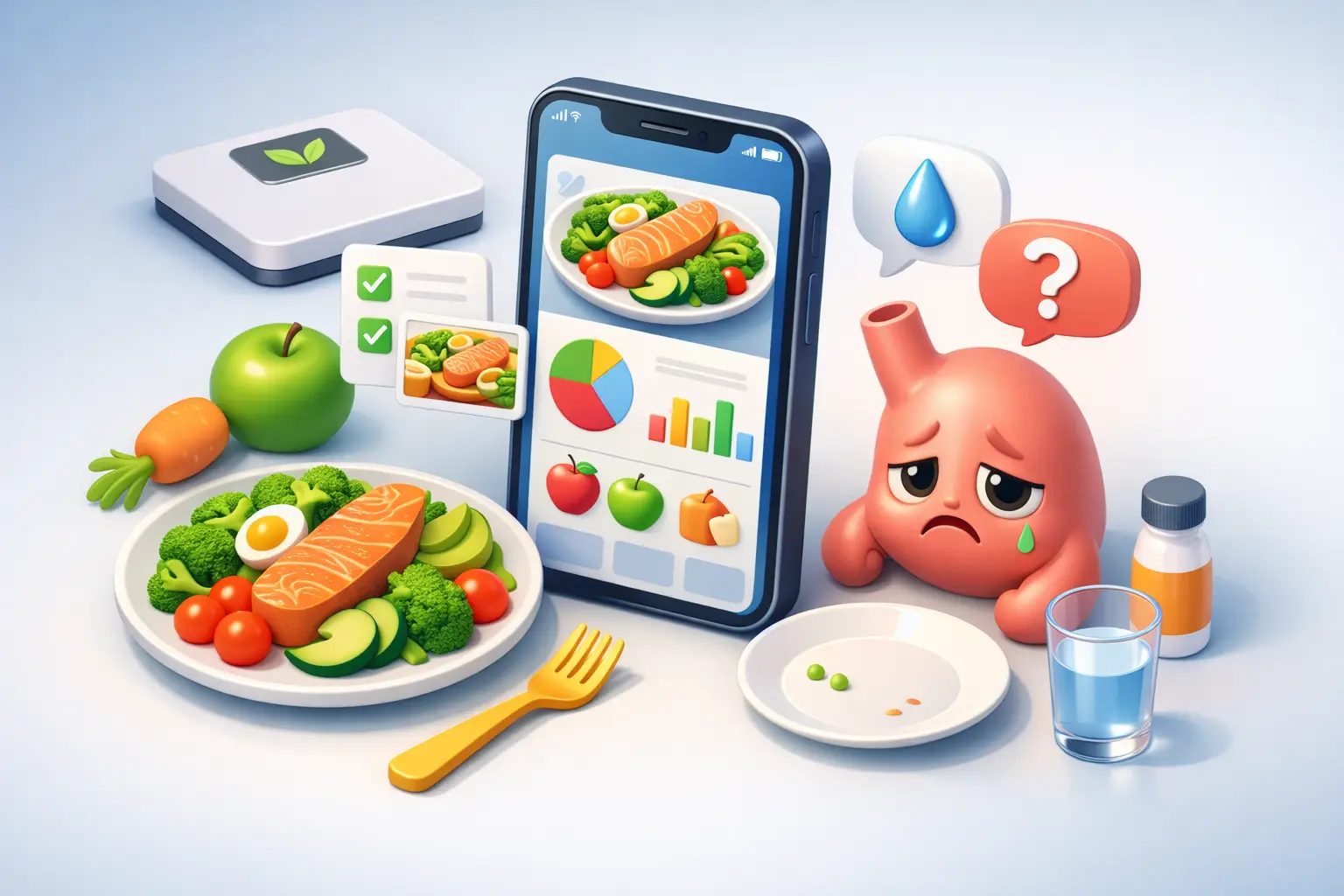
Appetite loss sounds simple until you are living it. One minute you are staring at a plate that used to be easy, the next you are three bites in, feeling full, queasy, or just completely put off. If you are looking for a nutrition app for appetite loss, you probably do not need more food rules. You need help figuring out what feels manageable today.
That is especially true if appetite loss is linked to GLP-1 medication, stress, illness, recovery, or a run of low-energy days where cooking feels like too much effort. The right app should lower the mental load. It should help you eat enough, spot patterns, and stop every meal from turning into a guessing game.
What a nutrition app for appetite loss should actually do
A lot of nutrition apps are built for people with big appetites, strict fitness goals, or calorie-focused habits. That is not much use when your main win is getting breakfast down and keeping it there.
A good nutrition app for appetite loss should meet you where you are. That usually means smaller, simpler meals. Flexible tracking. Gentle reminders. Clear ideas when your brain has gone blank. It should help you notice what is working without making you feel like you are failing on the days when food feels hard.
For some people, appetite loss shows up as early fullness. For others, it is nausea, taste changes, food aversions, or a weird stop-start hunger pattern. If you are on GLP-1 medication, it can also shift across your injection cycle. That matters, because the food that feels fine on one day might be impossible on another.
The real problem is not just low appetite
Low appetite often creates a chain reaction. You eat less, then your energy drops. Your protein intake slips. You leave longer gaps between meals, then feel even less like eating. If nausea is in the mix, you may start avoiding foods that once felt safe because you associate them with feeling rough.
This is where an app can genuinely help. Not by pushing bigger portions, but by making the next decision easier. A useful app can suggest lighter meals, help you log symptoms alongside food, and show you patterns you would probably miss in the moment.
That pattern piece is bigger than it sounds. When appetite is unpredictable, memory gets unreliable too. You might think nothing is working, when actually cold foods are going down better than hot ones. Or mornings are easier than evenings. Or your appetite dips most sharply in the 48 hours after an injection. Good support is not about perfection. It is about noticing enough to make tomorrow easier.
Features that matter most in a nutrition app for appetite loss
The best app for this job is rarely the one with the most features. It is the one that solves the actual problem in front of you.
Simple meal ideas for low-appetite days
When appetite is low, choice can feel exhausting. You do not need a hundred ambitious recipe ideas if the smell of cooking turns your stomach. You need realistic options. Think soft meals, small portions, protein that does not feel heavy, and food that can be adapted around nausea or sensitivity.
This matters even more for GLP-1 users, because your tolerance can change from one day to the next. A helpful app should make it easy to find meals that are lighter, quicker, and easier to get through without overthinking it.
Symptom tracking that connects to food
If the app only tracks food, it is missing half the story. Appetite loss is often tied to symptoms like nausea, bloating, reflux, fatigue, or that uncomfortable too-full feeling after a few bites.
When symptom tracking sits next to meal logging, you can spot useful links. Maybe rich foods are harder in the evening. Maybe certain textures work better. Maybe your worst nausea is not random at all. That kind of clarity can make eating feel less frustrating and more manageable.
Flexible tracking without calorie pressure
When your appetite is low, you do not need an app shaming you for missing targets or turning every meal into maths. Tracking should support you, not make food feel even harder.
A better approach is focusing on what helps in real life. Did you manage a protein source today? Did smaller meals go better than larger ones? Did something stay down comfortably? Those are useful wins. They tell you more than a red warning screen ever will.
Personalisation
Appetite loss is not one-size-fits-all. Some people do better with cold snacks. Others need very plain food in the first half of the day and more variety later on. If you are on medication, your needs may change across the week.
That is why personalisation matters. The best apps adjust suggestions based on symptoms, food preferences, and your routine instead of handing out the same generic meal plan to everyone.
Why GLP-1 users need something more specific
If your appetite loss is linked to Ozempic, Wegovy, Mounjaro, Zepbound, or compounded semaglutide or tirzepatide, general nutrition advice often falls short. The problem is not just eating less. It is eating less while still trying to get enough protein, enough overall nutrition, and foods that do not make side effects worse.
A generic meal planner may suggest meals that are technically healthy but feel impossible after an injection. It may ignore nausea completely. It may not account for the way your appetite changes through the 72-hour window after your dose.
That is why a more targeted app can make such a difference. If it understands medication timing, symptom changes, and smaller appetite patterns, it can give you suggestions that feel realistic instead of aspirational.
One example is Sillynutrition, built around both GLP-1 aftercare and everyday nutrition planning. Its GLP-1 Mode includes medication tracking, symptom logging, injection cycle-aware nutrition support, and meal ideas designed for low-appetite, side-effect-heavy days. Its Nutrition Mode supports people who want smart meal planning without medication tracking. That dual setup matters because not everyone needs the same kind of support every week.
What to avoid when choosing an app
Some apps make appetite loss harder by pushing the wrong kind of structure. If every screen is built around fat loss targets, strict calorie deficits, or high-volume eating, it can feel miles away from what your body is actually dealing with.
Be careful with apps that treat missed meals like a discipline problem. Low appetite is not a motivation issue. It is not fixed by more pressure. The same goes for apps with lots of data but no useful interpretation. Logging everything is not very helpful if the app cannot turn that information into practical next steps.
It also helps to be wary of anything too rigid. On a good day, you may manage proper meals. On a rough day, a few bites here and there might be the win. Your app should have room for both.
How to tell if an app is helping
The right app will not magically restore your appetite overnight. That is not the benchmark. A better test is whether eating feels less confusing and less stressful after a week or two of using it.
You might notice you are skipping fewer meals. You may have a short list of safe foods that reliably work. You may understand your symptom pattern better. You may stop wasting energy trying meals that sound healthy but feel impossible to eat.
Small wins count here. A breakfast that stayed down. A snack that felt tolerable. A better understanding of when your appetite is lowest. Progress in this space often looks quiet, but it still matters.
The best nutrition app for appetite loss is the one you will use
That sounds obvious, but it matters. If an app is too clinical, too fiddly, or too focused on goals that do not match your reality, you will stop opening it. The best fit is one that feels supportive on your hardest days, not just your most organised ones.
Look for something easy to use when your energy is low. Look for symptom-aware meal support. Look for flexibility. And if you are on GLP-1 medication, look for an app that understands that appetite loss is not a side note. It is often the whole challenge.
You do not need to force perfect meals or pretend this part is easy. Sometimes the next right step is simply finding a tool that helps you eat a bit more comfortably, with less guesswork and less pressure. That is a solid place to start.