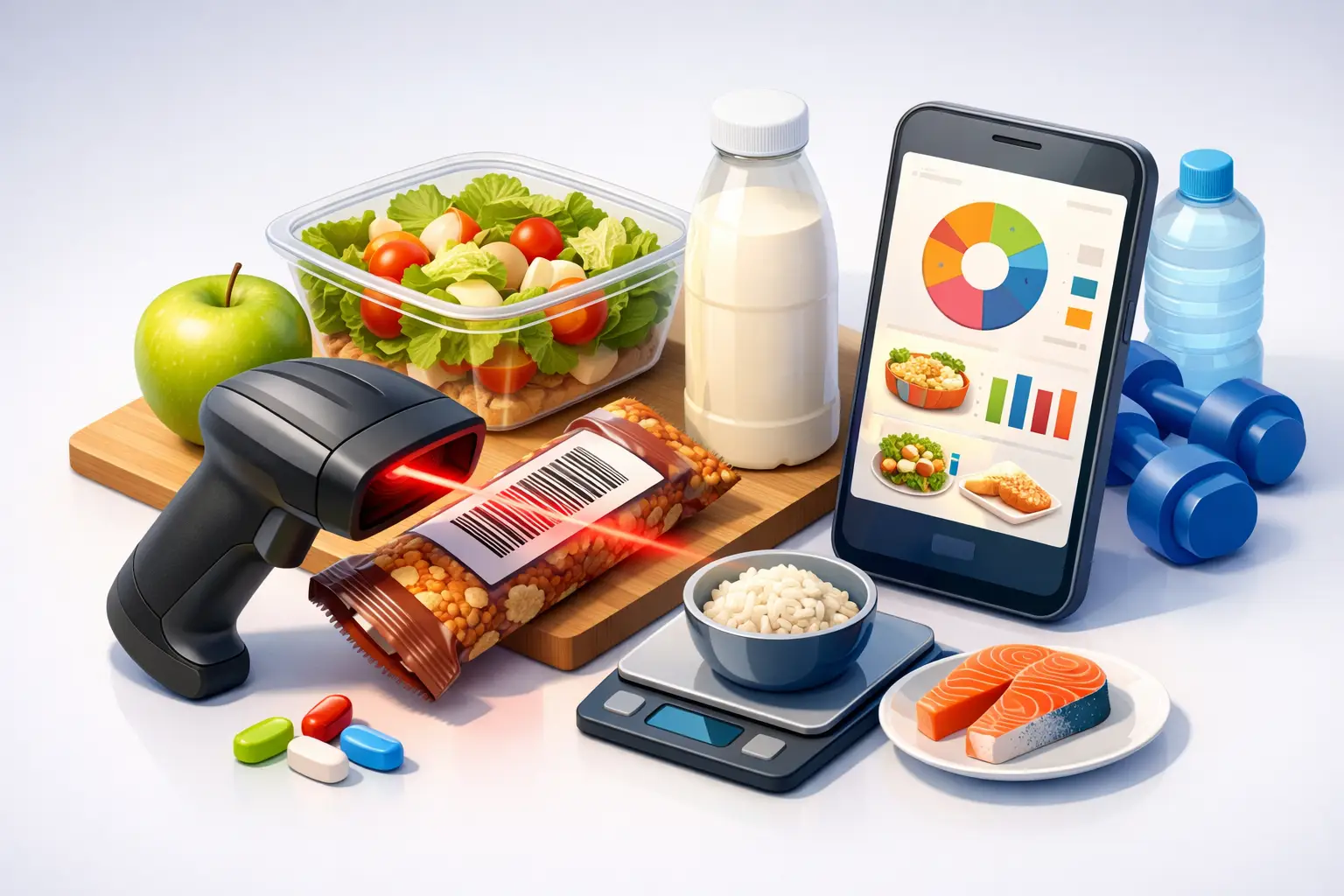
You know the moment. You pick up a yoghurt, flip the pot over, squint at the label, then try to type tiny nutrition numbers into an app while your tea goes cold. A good barcode scanner macro tracker should stop that nonsense. It should make logging food feel quick, clear and low-effort, especially on the days when your appetite is odd, your routine is off, or you simply cannot be bothered.
That matters more than people admit. Most of us do not give up on nutrition tracking because we do not care. We give up because the process is annoying. Too many taps. Wrong food matches. American products in a UK search. Portion sizes that make no sense. If the tool adds friction, people stop using it.
What a barcode scanner macro tracker should actually do
At the most basic level, it should let you scan a product and instantly pull through the right nutritional information. Protein, carbs, fat, calories, and serving size should be easy to read and easy to adjust. That sounds simple, but there is a big difference between a feature that exists and one that works properly.
A useful tracker gets the common things right. UK barcodes should return UK products. Branded foods should not be replaced by vague generic entries. Portion editing should feel straightforward, not like filling in a tax form. If you had half a pot, one slice, or 30g instead of the listed serving, you should be able to log that in seconds.
The better tools go further. They remember your usual foods. They learn patterns. They make repeat logging faster the more you use them. That matters because real eating is repetitive. People often rotate through the same breakfasts, the same snacks, and the same quick dinners. A smart app should work with that, not pretend every meal is a brand new event.
Why speed matters more than perfection
Lots of nutrition apps are built around the idea that users want complete precision all the time. In reality, most people want something more practical. They want a fast, good-enough picture of what they are eating so they can make calmer choices.
That is especially true if food feels complicated already. Maybe you are trying to eat more protein without overthinking every meal. Maybe you are on a GLP-1 medication and some days your appetite disappears, then suddenly comes back at the wrong time. Maybe you are trying to eat in a way that supports your energy, your training, or your routine, and you need less admin, not more.
A barcode scanner macro tracker helps because it reduces mental load. You do not have to search from scratch. You do not have to guess whether one cereal bar is 80 calories or 180. You get an answer quickly, and that makes follow-through much more likely.
There is a trade-off, though. Barcode logging is brilliant for packaged foods, but it is less useful for home-cooked meals, café lunches, or the handfuls-and-bites eating that happens in real life. That is why the best trackers do not rely on scanning alone. They combine barcode scanning with manual logging, saved meals, recipes, and simple edits.
The features that make the biggest difference
If you are choosing a barcode scanner macro tracker, look past the flashy screenshots. The real value is in the boring bits that make daily use easier.
A strong food database is top of the list. If you live in the UK, you need UK products to appear reliably. There is nothing more irritating than scanning a supermarket item and getting an American alternative that does not match the packaging in your hand.
Speed is next. Scanning should be near instant. Editing should take a tap or two, not a minute. The point is to lower resistance. If logging breakfast feels easy, you are more likely to log lunch as well.
Context also matters. Macros on their own are useful, but they are even more useful when they sit inside a bigger picture. Protein targets, meal planning, recipes, symptom tracking, appetite changes, and routine patterns all affect what is realistic on any given day. If an app only shows numbers and ignores the human side, it can feel cold very quickly.
That is where personalisation matters. For one person, a helpful nudge might be more protein at breakfast. For another, it might be smaller, simpler meals because nausea is making full portions hard. For someone else, it might be noticing that low-fibre choices work better on injection day, while more variety feels fine later in the week. Good tracking should support decisions, not create guilt.
Barcode scanner macro tracker for GLP-1 users
If you are taking Ozempic, Wegovy, Mounjaro, Zepbound, or a compounded medication, nutrition tracking can feel different. You may not be chasing perfect numbers. You may just be trying to eat enough, tolerate meals better, or avoid that unpleasant cycle of eating too little all day and then feeling rough later.
In that situation, a barcode scanner macro tracker can be genuinely helpful because it gives you fast clarity when brain fog, nausea, or low appetite make food decisions harder. You can scan a product, check the protein, and decide if it is worth having. You can compare options without standing in the kitchen doing maths.
But the numbers alone are not the whole story. GLP-1 users often need flexibility. A high-protein food might look ideal on paper but feel impossible to eat that morning. A tracker that works well for this audience should leave room for symptom patterns, changing appetite, and those small wins that actually matter, like managing half a protein yoghurt or finally tolerating breakfast again.
That is one reason tools with dual functionality make more sense than single-purpose trackers. If your app can connect food logging with meal planning, recipe ideas, symptom support, and medication-aware patterns, the experience feels more useful and less clinical. That is the thinking behind Sillynutrition at https://www.sillynutrition.com - practical support, not food logging for the sake of it.
Where most tracking apps go wrong
The biggest problem is not usually missing features. It is poor fit with real behaviour.
Some apps are too obsessed with calories and treat every user like a bodybuilder or a spreadsheet. Others make macro tracking so fiddly that only the most patient people stick with it. Some rely on massive food databases but do not clean them up, so scans pull duplicate or inaccurate entries. And some forget that people do not eat packaged food at every meal, which leaves users stuck as soon as they cook something simple at home.
There is also the tone problem. If an app makes you feel judged, behind, or told off, you will stop opening it. Fast. Nutrition support should feel useful, not moral. You are not a bad person because yesterday went sideways or because dinner was toast and a yoghurt.
How to tell if a tracker will work for you
The best question is not, does it track everything? It is, will I still use this in three weeks?
Look at your own habits. If you mostly eat branded supermarket foods, barcode scanning will probably save you loads of time. If you cook from scratch, you will also need good recipe tools. If your appetite changes through the week, flexibility matters more than strict targets. If you want help choosing meals as well as logging them, a tracker-only app may feel limited pretty quickly.
It also helps to think about what success looks like for you. That might be hitting a protein goal more often. It might be noticing patterns in what leaves you feeling better. It might simply be making food decisions with less stress. A good app should support that goal clearly. If it buries the useful bits under clutter, it is not helping.
The best tracking tool is the one you can live with
A barcode scanner macro tracker does not need to be fancy to be useful. It needs to be accurate enough, quick enough, and kind enough to fit into ordinary life. That means helping on rushed mornings, weird appetite days, post-gym evenings, and the moments when you want support without a lecture.
If tracking feels easier, you are more likely to keep going. And when you keep going, you start seeing the patterns that actually help - the breakfast that keeps you steady, the snack that works when appetite is low, the meals that feel better on certain days. That is where progress usually starts. Not with perfection. With something simple enough to use when life is being life.