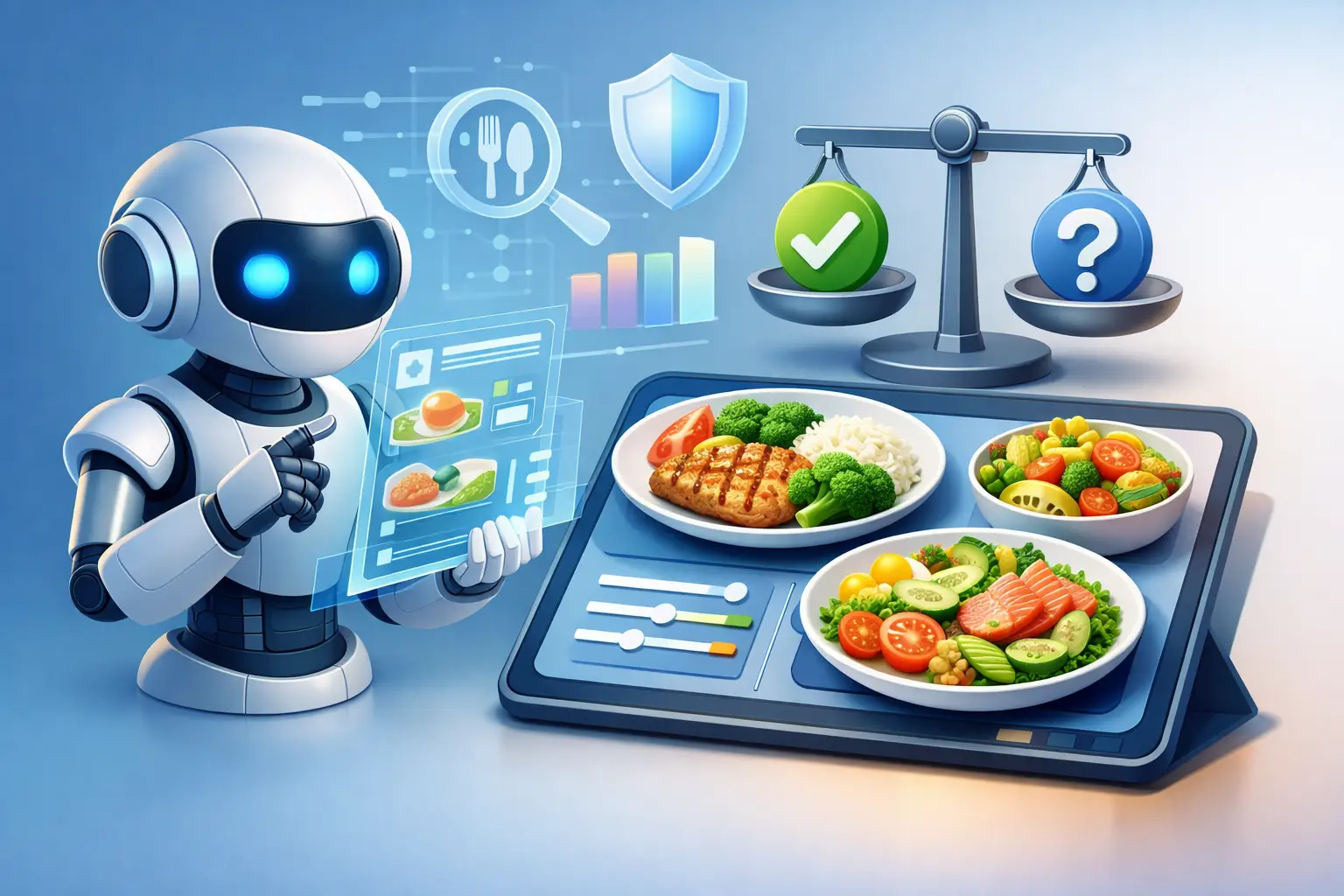
You can usually tell within 30 seconds if an AI meal plan actually gets your life. If it tells a GLP-1 user with morning nausea to eat a huge high-fibre breakfast, or gives a busy parent a lunch that takes 45 minutes to make, something is off. So, are AI meal plans accurate? Sometimes, yes. But only when the system has enough useful information, and only when it is built to respond to real human habits rather than ideal ones.
That answer is less dramatic than either side of the internet wants. AI meal plans are not magic, and they are not useless. They can be genuinely helpful for cutting through decision fatigue, giving structure, and suggesting meals that fit goals like higher protein, easier digestion, or better consistency. But accuracy depends on what the tool knows, how it makes decisions, and whether it can adapt when your appetite, routine or symptoms change.
Are AI meal plans accurate for real life?
The short version is this: AI meal plans can be accurate for patterns, but less accurate for context.
They are often good at processing clear inputs. If you tell a tool your calorie range, protein goal, food preferences, allergies and cooking time, it can produce a plan that looks sensible on paper. Many tools are also strong at spotting nutritional gaps, rotating ingredients, and building meals around a target like more protein or fewer ultra-processed snacks.
Where things get messy is real life. Real life is not a spreadsheet. Your appetite changes. Your week goes off track. You feel sick after an injection. You suddenly cannot face eggs again. You work late, skip lunch, then need something easy that will not upset your stomach. A generic AI plan often struggles here because it is only as accurate as the information it receives and the logic behind it.
That matters even more for people using GLP-1 medication. Appetite suppression, nausea, constipation, reflux and food aversions can shift day by day. A plan that looked nutritionally perfect on Sunday might feel impossible by Tuesday. In that situation, accuracy is not just about macros. It is about whether the meal is realistic, tolerable and useful when your body is behaving differently.
What AI meal plans usually get right
AI tends to be strongest when the goal is structure. If you are tired of asking yourself what to eat every day, a decent tool can remove a lot of friction. It can suggest balanced meals, spread protein more evenly across the day, and help you stop relying on the same three emergency dinners.
It is also good at personalisation at scale. Traditional meal plans are often static. They give everyone the same breakfast ideas and the same shopping list with a few token swaps. AI can usually go further. It can factor in vegetarian preferences, exclude foods you hate, account for prep time, and suggest meals based on what is already in your fridge. That is genuinely useful, especially if you want support without paying for one-to-one coaching.
For nutrition-focused users, AI can also improve consistency. Not perfection, just consistency. And that matters more than people think. Eating breakfast that you can actually tolerate, getting enough protein over the week, or having five go-to meals that support your energy is often more valuable than following a beautiful but unrealistic plan for three days.
Where AI meal plans fall short
The biggest problem is false confidence. A plan can look polished and still be wrong for you.
Some tools rely on broad assumptions. They may estimate energy needs from age, height and weight, then build meals around that number as if your routine, hunger and health status never change. Others pull from recipe databases without much quality control, which can lead to strange portion sizes, poor nutrient balance, or meals that are technically correct but deeply impractical.
There is also a difference between nutrition accuracy and lived accuracy. A plan may hit protein and fibre targets while ignoring the fact that you cannot tolerate spicy foods this week, have ten minutes to cook, or feel full after four bites. For GLP-1 users, that gap matters a lot. If the meal plan does not account for medication timing, side effects or appetite dips, it may be nutritionally neat but functionally useless.
And then there is the behaviour side. AI does not always understand emotional eating, food anxiety, social meals, or the very normal reality that some days you just need toast. That does not make the technology bad. It just means it should support your decisions, not replace your judgement.
What makes an AI meal plan more accurate?
Better inputs lead to better outputs. That sounds obvious, but it is the whole game.
If a tool only asks for your goal and dietary preference, expect a fairly basic plan. If it asks about allergies, appetite, digestion, cooking confidence, budget, schedule, symptoms and preferred foods, it has a much better chance of producing something useful. Accuracy improves when the system can respond to more than just weight-related goals.
Adaptive feedback matters too. The best AI meal plans are not one-and-done PDFs dressed up as personalisation. They learn from what you skip, what you repeat, what makes you feel good, and what you cannot stomach. If you keep swapping out large meals for smaller snacks, the plan should notice. If you report nausea or low appetite, it should adjust. If your routine changes, your meals should change with it.
This is where context-aware tools are in a different league from generic generators. For example, someone on a 72-hour post-injection appetite slump does not need the same meal suggestions as someone training for a half marathon. One person may need small, protein-forward meals that are gentle on the stomach. The other may need higher energy meals and more carbohydrate. Both are valid. Accuracy means matching the plan to the person, not forcing the person to fit the plan.
How to judge if an AI meal plan is actually good
Do not start by asking whether the plan looks healthy. Start by asking whether it feels usable.
A good plan should fit your appetite, your schedule and your kitchen reality. It should include foods you would genuinely eat. It should offer substitutions when your preferences change. It should not punish you for needing convenience foods, simpler meals or repeat options. If every meal feels like homework, the plan is not accurate enough for your life.
It should also make sense nutritionally without becoming obsessive. That means a reasonable spread of protein, fibre, fats and carbohydrates based on your goals. Not every user needs the same macro split, and not every meal needs to be perfectly balanced. But across a week, the plan should feel steady rather than chaotic.
For GLP-1 users, there are a few extra checks. Does it account for low appetite days? Does it suggest gentler meals when symptoms flare up? Does it avoid pushing volume over tolerance? Does it support hydration and practical protein intake rather than expecting you to eat like nothing has changed? Those details matter more than whether the meal plan uses trendy wellness language.
Are AI meal plans accurate enough to replace a dietitian?
Usually, no. Not fully.
If you have a medical condition, significant digestive symptoms, a history of disordered eating, complex food restrictions or medication-related side effects, human support still matters. AI can help with ideas, structure and daily decision-making, but it does not replace clinical judgement or nuanced care.
That said, not everyone needs a full dietitian relationship for every food decision. Plenty of people need something more practical than clinical. They want help planning meals, increasing protein, using what is in the fridge, or getting through the week without living on beige snack food. For that, a well-designed AI tool can be more accessible, faster and easier to stick with.
The best use case is often a middle ground. Let AI handle the everyday planning and reduce overwhelm. Use a qualified professional when symptoms are persistent, your needs are complex, or something feels off.
The real answer: accurate enough for support, not perfection
The most useful question is not “are AI meal plans accurate” in some universal sense. It is “accurate for what?”
If you want fast meal ideas, better structure, and a plan that adapts to your preferences, AI can be very effective. If you expect it to understand your body perfectly without good inputs, feedback or context, it will fall short. That is not failure. That is the limit of any system trying to help with something as personal as eating.
A smart tool should make food feel less overwhelming, not more controlled. It should help you make the next meal easier. It should leave room for nausea days, busy days, low-energy days and small wins. That is why the best platforms are built around adaptation, not perfection. Sillynutrition, for example, is designed around that real-life gap - supporting both everyday meal planning and the more specific needs that can come with GLP-1 medication.
If an AI meal plan helps you eat more regularly, feel more prepared, or stop staring into the fridge at 7pm wondering what now, that counts. Accuracy is not just about numbers. It is about whether the plan works when your life does what life does.