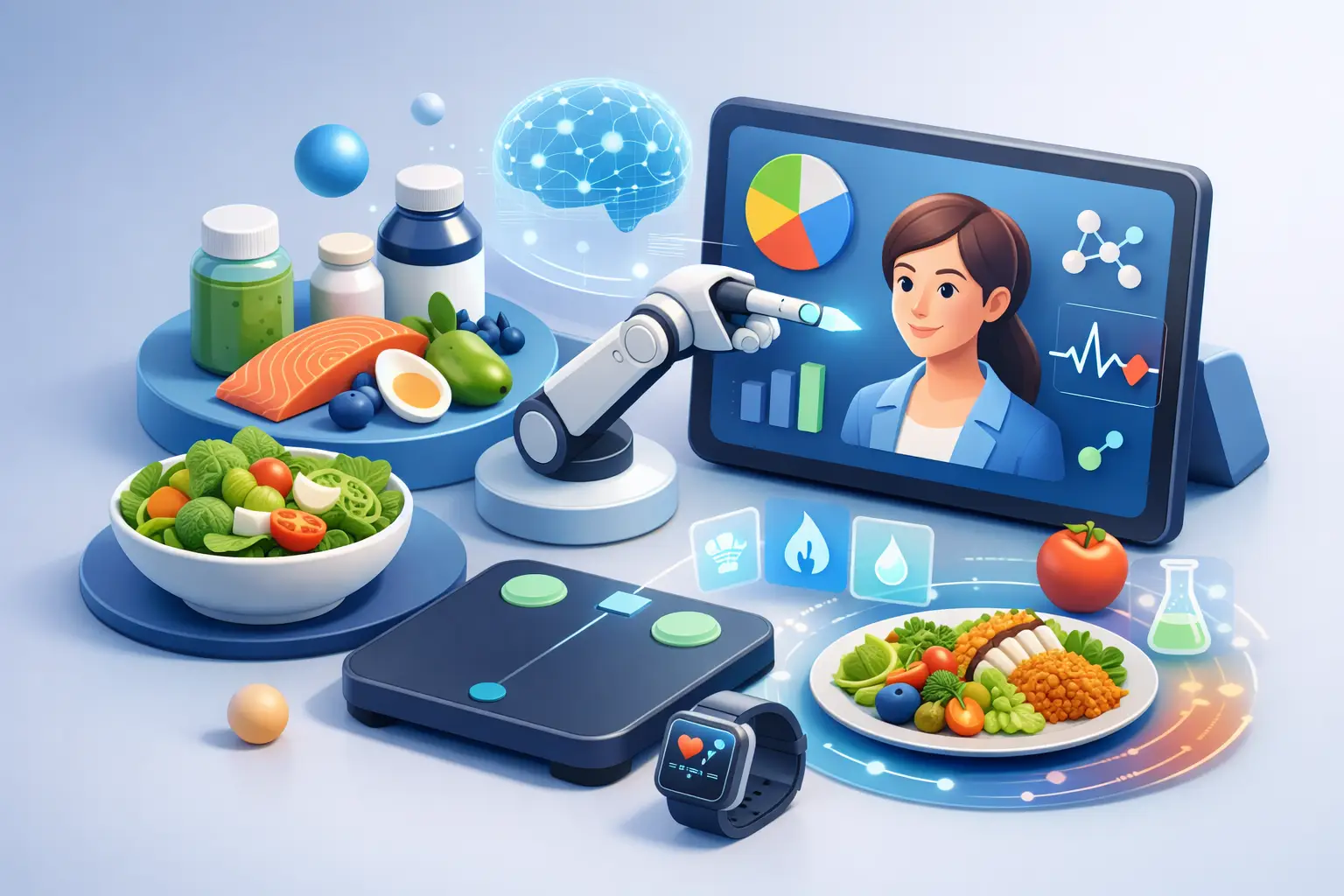
For many people, it’s not hunger that’s the problem—it’s knowing how to eat properly with less appetite.Some days, eating well is not a motivation problem. It is a logistics problem. Your appetite changes. Your week goes off track. You open the fridge, feel blank, and end up skipping meals or grabbing whatever feels easiest. That is where an ai personalised nutrition plan can genuinely help - not by judging you, but by taking some of the thinking off your plate.
The best version of this is not a flashy meal generator that throws random recipes at you. It is a tool that learns how you eat, what your body is doing, what your goals look like in real life, and what kind of support you actually need on a Tuesday when you feel rough. For people on GLP-1 medication, that matters even more. Hunger cues can change fast. Nausea can wipe out your usual routine. The plan that looked sensible on Sunday may feel impossible by Wednesday.
What an ai personalised nutrition plan should actually do
A useful ai personalised nutrition plan starts with context. It should look at more than age, weight and a generic goal. Real personalisation means it can respond to appetite shifts, food preferences, routine, budget, cooking ability and symptoms.
If you are using GLP-1 medication, it should also account for your injection schedule, how you tend to feel in the 24 to 72 hours after a dose, and whether certain foods sit better than others. If you are not on medication, the same principle still applies. Your needs on a gym day, a busy office day and a low-energy day are not identical, so your food plan should not be identical either.
This is the difference between personalisation and automation. Automation gives everyone a neat plan. Personalisation gives you a plan that bends when life does.
Why generic meal plans fall apart
Most people do not fail a nutrition plan because they do not care. They fail because the plan does not fit their real day.
A standard meal plan often assumes consistent appetite, plenty of prep time and zero curveballs. It might look great on paper, but it is not much help if breakfast suddenly feels impossible, if strong smells make nausea worse, or if you are trying to increase protein without forcing huge meals.
That is where AI can be useful. It can adjust quickly without turning every food decision into a maths exercise. If you log that lunch was too heavy, tomorrow's suggestion can shift. If your appetite is low, the plan can lean towards smaller, easier meals. If you have only three ingredients left in the fridge, it can work with that instead of expecting a full weekly shop.
Done well, this feels less like being told what to eat and more like having a practical backup brain.
Where AI helps most for GLP-1 users
GLP-1 aftercare is full of little decisions that are easy to underestimate until you are living them. What should you eat when your stomach feels off? How do you keep protein up when you are full after a few bites? What works on injection day compared with two days later?
This is where an ai personalised nutrition plan can move from helpful to genuinely reassuring. It can notice patterns between symptoms and meals. It can suggest gentler foods when nausea is high, then bring more variety back in when your body settles. It can steer you towards realistic portions instead of pushing a perfect plan that ignores how medication changes appetite.
It also helps remove some of the all-or-nothing thinking that can creep in. If dinner did not happen because you felt awful, that does not mean the day is ruined. A smart plan can offer a softer reset - something simple, protein-friendly and manageable - rather than leaving you to start from scratch.
For many people, that emotional part matters as much as the nutrition itself. You do not need another system that makes you feel behind.
Personalisation is not just about calories and macros
A lot of nutrition tools still treat personalisation as number tweaking. More protein. Fewer calories. Different macro split. Those things can matter, but they are not the whole picture.
Real food support also needs to factor in texture, timing and tolerance. Some people can manage a cold yoghurt bowl when they cannot face cooked food. Some need lighter meals in the morning and something more substantial later. Some want structure. Others need flexibility because family life, shift work or symptoms make a fixed plan unrealistic.
That is why the best tools feel less clinical and more human. They help you build meals around how you actually live. They do not punish you for changing your mind halfway through the week.
For anyone tired of restrictive diet language, this is a big shift. A good plan should help you eat in a way that supports your energy, your goals and your body without turning food into a daily test.
What to look for in an ai personalised nutrition plan
Not every AI nutrition tool deserves your trust. Some are clever on the surface but shallow underneath. The useful ones do a few things well.
First, they adapt in real time. If your appetite drops, symptoms flare, or your week gets chaotic, the plan should respond quickly. Second, they make decisions easier, not more complicated. You should not need to input twenty data points just to get lunch ideas. Third, they should be practical for UK users - with familiar foods, sensible portions and features that fit how people actually shop and eat here.
For GLP-1 users, there is another layer. The tool should understand medication-specific challenges rather than treating them like a side note. Injection timing, symptom changes and meal tolerance are not niche details. They are part of the whole experience.
This is exactly why dual-mode tools are starting to matter more. Some people need medication-aware support. Others want smart meal planning without that layer. A platform that can do both makes sense because health routines are not always static.
The role of speed, especially on hard days
When you feel fine, planning meals can be mildly annoying. When you feel sick, flat or overwhelmed, it can feel impossible.
Speed matters more than people admit. If an app can quickly turn the food you already have into a usable meal idea, that is helpful. If it can suggest options based on your symptoms, that is better. If it can help you spot patterns over time so you stop guessing what might work, that is even better.
This is where AI earns its place. Not because it is futuristic, but because it can reduce friction. It shortens the gap between I do not know what to eat and here is something I can manage.
That is a very different promise from old-school meal plans that ask for perfect prep, perfect compliance and perfect energy. Most people do not need more pressure. They need fewer barriers.
A smarter plan still needs common sense
AI can do a lot, but it is not magic. It is only as helpful as the information it works with and the design behind it. If your data is patchy, your suggestions may be too. If a tool pushes generic advice dressed up as personalisation, the shine wears off quickly.
There is also a limit to what an app should do. It can support everyday nutrition decisions, help you notice patterns and make food planning easier. It is not a replacement for medical advice when symptoms become severe or unusual. That trade-off matters. Good health tech should be supportive, not overconfident.
The sweet spot is practical guidance that feels responsive without pretending to know everything. That balance is what builds trust.
Why this approach feels more sustainable
The real win with an ai personalised nutrition plan is not that it creates a perfect week of meals. It is that it helps you keep going when life is messy.
Maybe your win is finally finding breakfasts you can tolerate after an injection. Maybe it is eating enough protein without feeling stuffed. Maybe it is having a plan that does not collapse because one meal changed. Those are not small things. They are exactly the kind of daily shifts that make healthier routines stick.
That is also why a more supportive, body-aware approach lands better than rigid nutrition rules. You are not trying to become a machine. You are trying to feed yourself well in a real body, with real symptoms, real preferences and real interruptions.
Tools like Sillynutrition are built around that reality - blending GLP-1 support and everyday nutrition planning in one place, without making it feel clinical or complicated.
If nutrition support is going to be useful, it has to meet you where you are, not where some ideal version of you might be. A good plan does not just tell you what to eat. It helps you feel a bit more capable the next time food feels hard.