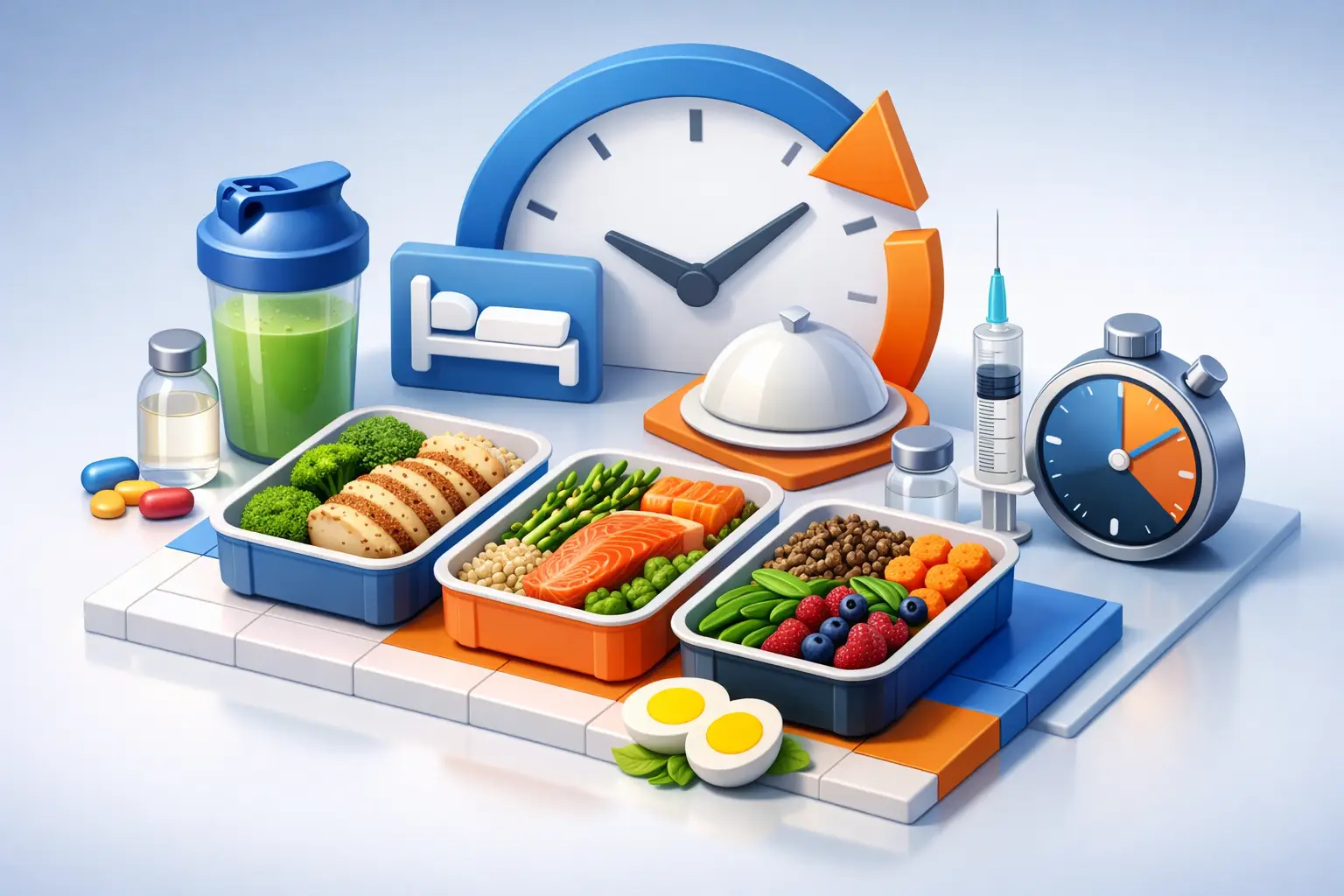
If you've ever stared at the fridge the day after your jab and thought, I know I should eat something but absolutely nothing sounds good, you're exactly who 72 hour injection cycle meals are for. Not because you need a perfect food plan. Because the first few days after an injection can feel completely different from the rest of the week, and your meals need to catch up with that reality.
For a lot of people on GLP-1 medication, the first 72 hours bring the biggest shift. Appetite can drop hard. Nausea can sneak in. Fullness can hit after three bites. Then, a couple of days later, food starts to feel more manageable again. That change matters. If you try to eat the same way every day, you'll often end up either forcing food when your stomach is saying no, or under-eating protein and fibre when your body still needs support.
Why 72 hour injection cycle meals make sense
The idea is simple. You match your meals to how you tend to feel across the first three days after your injection. Not in a rigid, meal-prep influencer way. More in a real-life, body-aware way.
Day 1 is often the trickiest. Some people feel fine. Others get nausea, reflux, bloating, or a weird food aversion where even the thought of a usual favourite makes them want to close the kitchen door and walk away. Day 2 can still be patchy, but many people can tolerate a bit more volume or texture. By day 3, appetite may still be lower than before medication, but eating usually feels less like a battle.
That is why one meal plan rarely fits the whole week. Your body is giving different signals across the injection cycle. Listening to that isn't being inconsistent. It's being smart.
How to build 72 hour injection cycle meals without overthinking it
Start with one goal for each meal - make it easier to eat, easier to digest, or easier to hit your protein. You do not need every plate to be perfectly balanced at every single sitting. Sometimes a smaller, gentler meal that stays down is the win.
A helpful way to think about it is this. In the first 72 hours, texture often matters just as much as nutrition. Dry chicken breast and a massive salad might look healthy on paper, but if it turns your stomach, it is not the right meal for that moment. Softer foods, simple flavours, and smaller portions often work better early in the cycle.
Hydration matters too. Not in a nagging, carry-a-two-litre-bottle-at-all-times way. Just in the practical sense that dehydration can make nausea, headaches and tiredness feel worse. Sipping little and often tends to work better than trying to down loads at once.
Day 1 meals - when appetite is lowest
Day 1 is usually about reducing friction. You want food that feels low effort to chew, swallow and digest. That might mean half portions, snack-style meals, or foods you can eat slowly without feeling overwhelmed.
Good options are usually soft, plain-ish and protein-aware. Think Greek yoghurt with a few berries, scrambled eggs on toast, cottage cheese with crackers, porridge made with milk, a simple protein smoothie, or soup with some shredded chicken or lentils blended in. If cold foods feel easier than hot foods, go with that. If hot foods settle better, follow that instead. It depends on the person.
This is also the day to be realistic about rich meals. Greasy takeaways, huge portions, very spicy food, or anything heavily fried can be fine for some people, but for many they are exactly what tips mild nausea into full regret. That does not mean those foods are banned forever. It just means Day 1 might not be the best timing.
If you're struggling to manage full meals, think in mini-meals. A yoghurt at 9am, half a sandwich at noon, a banana with peanut butter later, then a small bowl of soup in the evening still counts as feeding yourself well.
A simple Day 1 plate formula
Keep it light. Pick one gentle protein, one easy carb, and one optional add-on. For example, eggs with toast, yoghurt with oats, or soup with crackers. If veg feels like too much, leave it for later. Short term flexibility beats forcing a "perfect" plate.
Day 2 meals - a bit more room to work with
Day 2 often sits in the middle. You might still feel fuller faster than usual, but the sharp edge of side effects may have eased. This is where 72 hour injection cycle meals can start to include a bit more structure.
Protein stays important because it supports muscle, energy and staying power across the day, especially when appetite is unreliable. But Day 2 meals can often handle more texture and a bit more variety. A wrap with chicken and soft salad, overnight oats with chia and yoghurt, a jacket potato with tuna and a little grated cheese, or rice with salmon and cooked veg can work well.
Cooked vegetables are often easier than large raw salads during this window. Softer textures can be kinder if your stomach still feels sensitive. It can also help to keep portions modest and go back for more later if you want it, rather than loading a full plate and feeling defeated three forkfuls in.
This is a good day for planning ahead too. If you know your injection knocks your appetite sideways, preparing Day 2 options in advance can save you from reaching the point where you're hungry, slightly sick, and have no idea what to eat.
Day 3 meals - building back into normal eating
By Day 3, many people find they can eat more normally again, even if "normal" now means smaller portions than before starting medication. This is often the easiest day to focus on a more rounded meal pattern.
That could look like a proper breakfast, a lunch with protein and fibre, and a dinner that actually sounds appealing instead of merely tolerable. Think chicken and rice bowls, pasta with turkey mince, baked beans on wholemeal toast with eggs, or a stir-fry with tofu and noodles. You still do not need huge portions. You just have a bit more flexibility.
This is also the point where catching up on overall nutrition can help. If Days 1 and 2 were light, Day 3 is a good moment to gently bring fibre, fruit, veg and stronger protein sources back in. Not by stuffing yourself. Just by making choices that feel a bit more complete.
When day-by-day plans need adjusting
Not everyone follows the same pattern. Some people feel worst on Day 2, not Day 1. Some have almost no side effects at all until a dose increase. Others feel appetite suppression all week. So the best 72 hour injection cycle meals are not really about strict rules. They are about noticing patterns.
If every week your breakfast goes off the rails the morning after your injection, that tells you something. If cold meals work better than hot ones, that matters. If you can manage dinner but lunch feels impossible, build around that. The useful plan is the one that matches your actual week, not the one that looks nicest written in a notes app.
What to keep in the house for 72 hour injection cycle meals
A good GLP-1 kitchen is not about willpower. It is about reducing decision fatigue. Keep a few low-effort staples around for the rougher days. Yoghurt, eggs, milk, protein puddings, soup, oats, bread, wraps, bananas, rice, crackers, cottage cheese and easy freezer meals can go a long way.
The best foods are the ones you will genuinely eat when you're tired, queasy or can't face cooking. There is no prize for buying aspirational ingredients and then letting them die in the veg drawer.
If you want more structure without making meal planning your full-time job, tools that track symptoms alongside food can help you spot patterns much faster. That's exactly why apps like Sillynutrition are building around the real 72-hour cycle, not just generic healthy eating advice.
The goal is not perfection. It's a calmer week.
The real benefit of 72 hour injection cycle meals is not that they look tidy on a plan. It's that they remove some of the daily guesswork. You stop asking, why can't I eat like I did three days ago, and start asking, what will feel manageable today?
That shift matters. It cuts guilt. It helps you eat more consistently. And it makes those early post-injection days feel less like something happening to you and more like something you know how to handle.
If this week all you manage is choosing gentler meals that sit better and getting a bit more protein in where you can, that's not a small thing. That's progress you can actually feel.